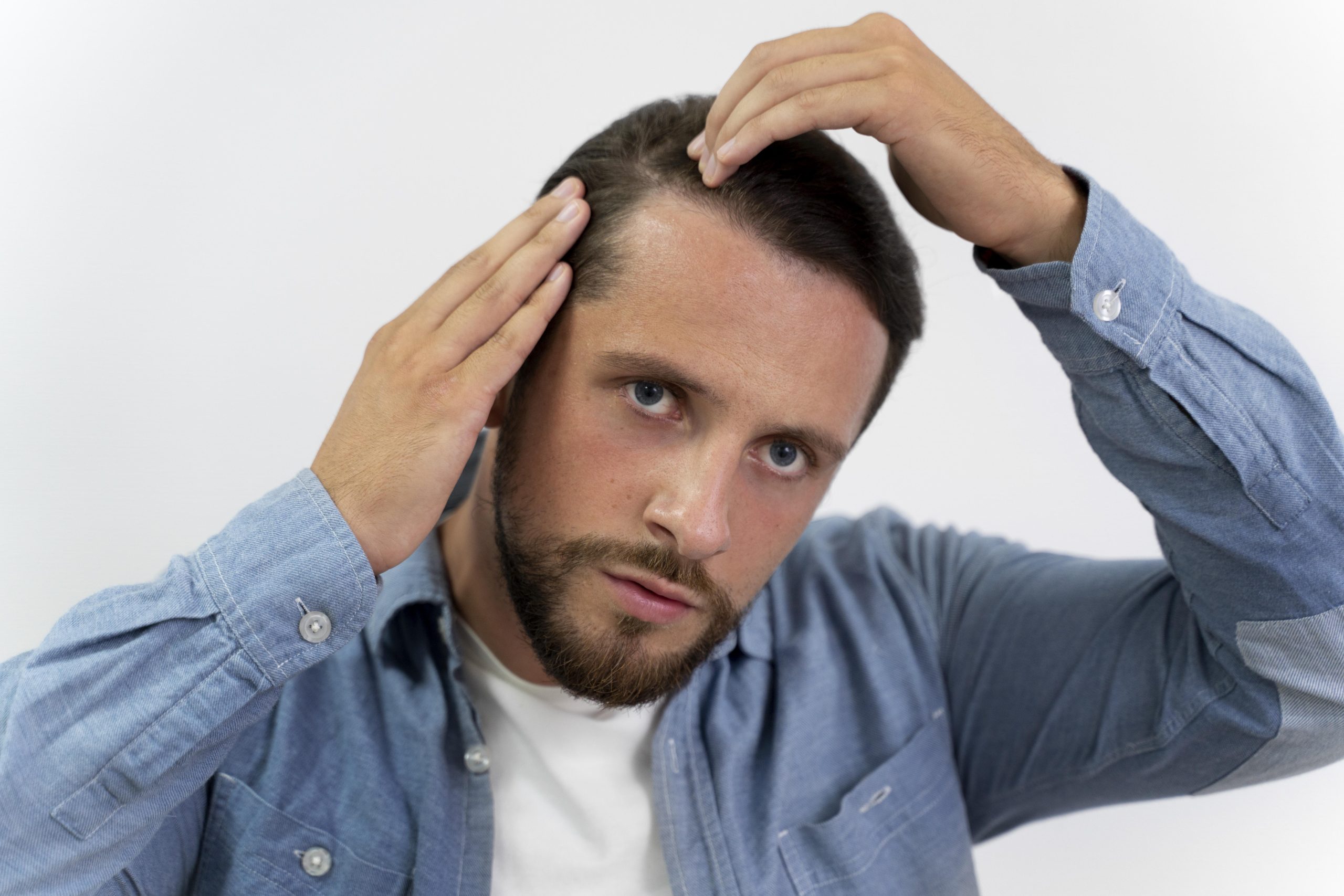
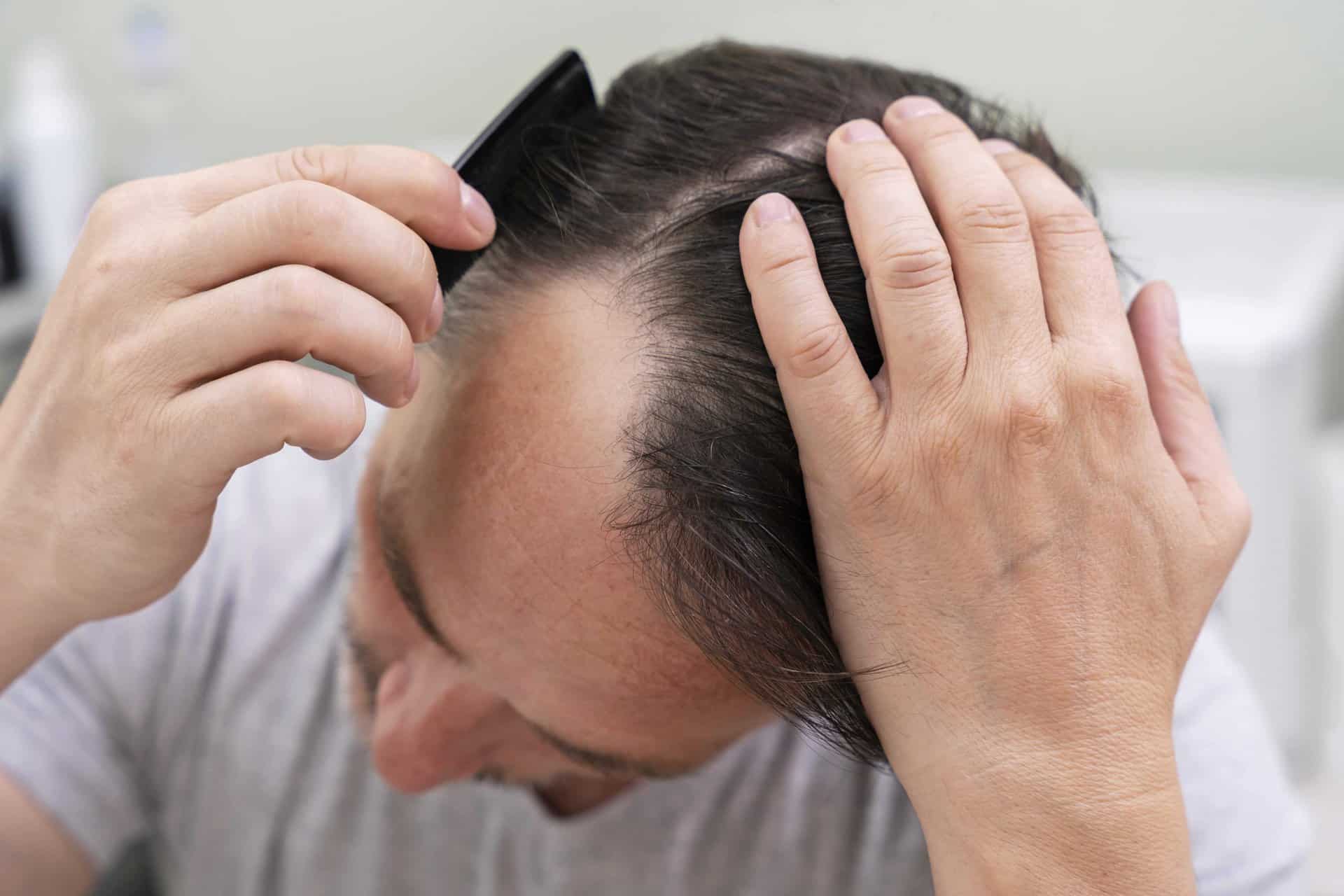
If you've noticed your hair thinning during perimenopause or menopause, you're not imagining it — and you're far from alone.…
Hair loss in women: Causes, signs & treatment options
Table of Contents
hide
Hair loss is often thought of as a men’s issue — but in fact it is estimated that more than 50% of women will experience noticeable hair loss at some point in their lives. Fortunately, with the right diagnosis and treatment plan, female hair loss is highly manageable, with options ranging from the non-surgical to the more permanent hair transplant for women.
Is hair loss normal in women?
Some degree of daily shedding is completely normal, with both men and women losing between 50 and 100 hairs per day as part of the natural hair growth cycle. What’s not normal is persistent thinning, a widening part, or a noticeable reduction in overall volume. If you’re consistently noticing more hair in the shower, on your pillow, or in your brush, it may be time to have an evaluation.
What can cause female hair loss?
Hair loss is rarely down to a single cause, with the most common contributing factors including:
- Genetics (androgenetic alopecia): Also known as female pattern baldness, this is the most common cause of hair loss in women and tends to run in the family. The hair follicles’ sensitivity to DHT plays a key role here. You can learn more in our article on DHT and hair loss.
- Hormonal changes: Fluctuations during perimenopause, menopause, pregnancy, and postpartum recovery can all trigger increased shedding.
- Stress (telogen effluvium): Significant physical or emotional stress can push large numbers of hair follicles into a resting phase, causing diffuse shedding weeks or months after a significantly stressful event or period. Read our guide on how to regain hair loss caused by stress for more information.
- Nutritional deficiencies: Low iron, protein, vitamin D, or B12 can also disrupt the hair growth cycle. Find out more about which vitamin deficiencies cause hair loss and what to do about them.
- Thyroid conditions: Both hypothyroidism and hyperthyroidism are commonly associated with hair thinning.
- Medications: the side effects of certain medications—including some used for blood pressure, depression, and hormonal conditions—may result in hair loss.
Because the right treatment depends entirely on the underlying cause, a proper medical evaluation is always the essential first step.
What does female hair loss look like?

Unlike male pattern baldness, which tends to follow a predictable pattern of recession at the hairline and temples, female hair loss most commonly presents as:
- Diffuse thinning across the top or crown of the scalp
- A widening part line
- Reduced ponytail thickness
- Thinning at the temples or frontal hairline
- Increased shedding is noticed in the shower, on your pillow, or on your brush
Female pattern hair loss is often more subtle in its early stages, which is why many women don’t seek help until significant thinning has already occurred. Early intervention consistently produces better outcomes.
When should you consult a doctor about your hair loss?
If you’ve noticed persistent thinning, a change in your part, or a reduction in overall hair density that’s lasted more than a few months, it’s worth having it evaluated by a specialist. At FolliclMD, all consultations (with applicable fees) include a careful hair evaluation through direct digital magnification to identify the cause of your hair loss and determine the most appropriate course of treatment.

What are the treatment options for female hair loss?

Treatment for hair loss in women depends on the diagnosis, the stage of hair loss, and your personal goals. At FolliclMD, we offer a comprehensive range of hair loss treatments for women, including:
FUE Hair Transplant
A permanent, surgical solution for women with localized thinning. Individual follicles are extracted from a donor area and transplanted to areas of reduced density, producing natural-looking, long-lasting results.
PRP Therapy
A non-surgical treatment that uses your own blood to stimulate follicle regeneration and improve hair density. Ideal for early-stage hair loss or as a complement to other treatments.
Laser Therapy (LLLT)
Low-level laser therapy promotes scalp circulation and follicle activation, helping to slow hair loss and support regrowth.
Medication / Minoxidil
Topical or oral minoxidil remains one of the most clinically supported non-surgical options for female hair loss.
Natural Treatments & Supplements
Nutritional support can be tailored to address deficiencies that may be contributing to shedding.
Many patients benefit from a combination of approaches, which is why a personalized treatment plan, built around your specific diagnosis, is always the most effective path forward.
Can female hair loss be reversed?
In many cases, particularly if treatment begins early enough, the hair loss can be reversed. The success of treatment depends on the cause, the stage of hair loss, and the type of intervention used. Hormonal and stress-related hair loss often responds well to non-surgical treatments.
Female pattern baldness can be slowed and, in some cases, partially reversed with the right combination of treatments. For women with more advanced thinning, a surgical hair restoration solution may be the most effective long-term option.